On Falling in Love with A Man That Doesn’t Exist
Almost ten years later, I’m still struck by how little we are taught about narcissism and the dangers of narcissistic abuse. These patterns can leave deep psychological scars, yet formal education rarely addresses them. Most people only learn about narcissistic behavior through personal experience, pop psychology, or self-help books—often after the damage is already done. While schools emphasize interpersonal skills, conflict resolution, and even bullying, the subtler, manipulative forms of abuse—gaslighting, emotional exploitation, and coercive control—remain largely invisible.
This gap in emotional literacy is surprising, especially because understanding narcissistic patterns could help people protect themselves, foster mental health awareness, and prevent cycles of abuse in relationships and workplaces. In short, it’s an absence in public education that affects us all.
From my own experience, narcissistic abuse rarely announces itself as abuse. It arrives disguised as devotion. Intensity is mistaken for intimacy, and certainty. Mirroring replaces mutuality, and speed stands in for safety. When the narcissist feels secure enough, the love bombing gives way to the intentional erosion of meaning and gaslighting that makes you second-guess reality and activates your insecurities.
Why is this?
Because the narcissist understands that by redirecting your attention inward—toward your own perceived flaws, doubts, and insecurities—rather than on their abusive behavior, they can keep you trapped in the relationship. This shift exploits the nervous system’s attachment wiring, causing you to question your reality and doubt your worth. As a result, you become focused on seeking validation and reassurance instead of the true source of harm—the narcissist’s manipulation.
This causes the victim to replace observation with self-monitoring, discernment with self-correction. In this way, the abuser gradually recedes from view, becoming psychologically obscured by the victim’s effort to manage their own perceived failures.
Occasional kindness becomes more binding than consistent care, teaching the victim that endurance is sometimes rewarded. Hope begins to replace truth as the organizing principle of the relationship, and this intermittent reinforcement deepens the attachment. The cycle of idealization, devaluation, and repair activates the brain’s reward system in unpredictable ways.
Under sustained emotional threat, the nervous system eventually takes over. The body enters survival mode, where short-term safety eclipses long-term evaluation. Reason and reflection recede as threat detection dominates. In this state, perception narrows. The relationship is no longer experienced as it is, but as it must be navigated to avoid further harm. What appears from the outside as blindness is, from within, an adaptive response to danger.
Looking back, the one emotion that dominated my narcissistic relationship was confusion. What made the relationship so destabilizing was not only the physical and emotional violence but also the intentional erosion of meaning. Language became unreliable, and memory contested. I felt myself slowly dissolve under the pressure of his version of events that were simply not true. As a result, toward the end, I remember distinctly realizing that I no longer knew how I felt or what I thought about anything. But I did know that I had to get out.
What follows is an attempt to name how possible it is to fall in love with an idea of a person at the expense of seeing them for who they really are.
He was the end of the line for me.
The place where everything I thought I knew about love collapsed. Where love was swallowed into a black void—the same void I saw in his eyes when he was high on his own indifference to my suffering, or anyone else’s.
How did I get here?
He worked so hard to present an image of himself as the perfect boyfriend: caring, romantic, successful. He mirrored everything I thought I wanted. Even my dreams and worries seemed to belong to him. I didn’t question it. I fell in love. And then, slowly, I realized something was terribly wrong.
The first time he hit me, he said it was because he didn’t like the way I had slammed the door during an argument. Afterward, he begged for forgiveness—blaming stress at work, promising it would never happen again until a few months later, it did.
What I witnessed in that relationship was the fragility of the human mind: the splitting of personality, the ruthless drive of a narcissist’s ego to remain central at all costs, and the terrifying absence of empathy.
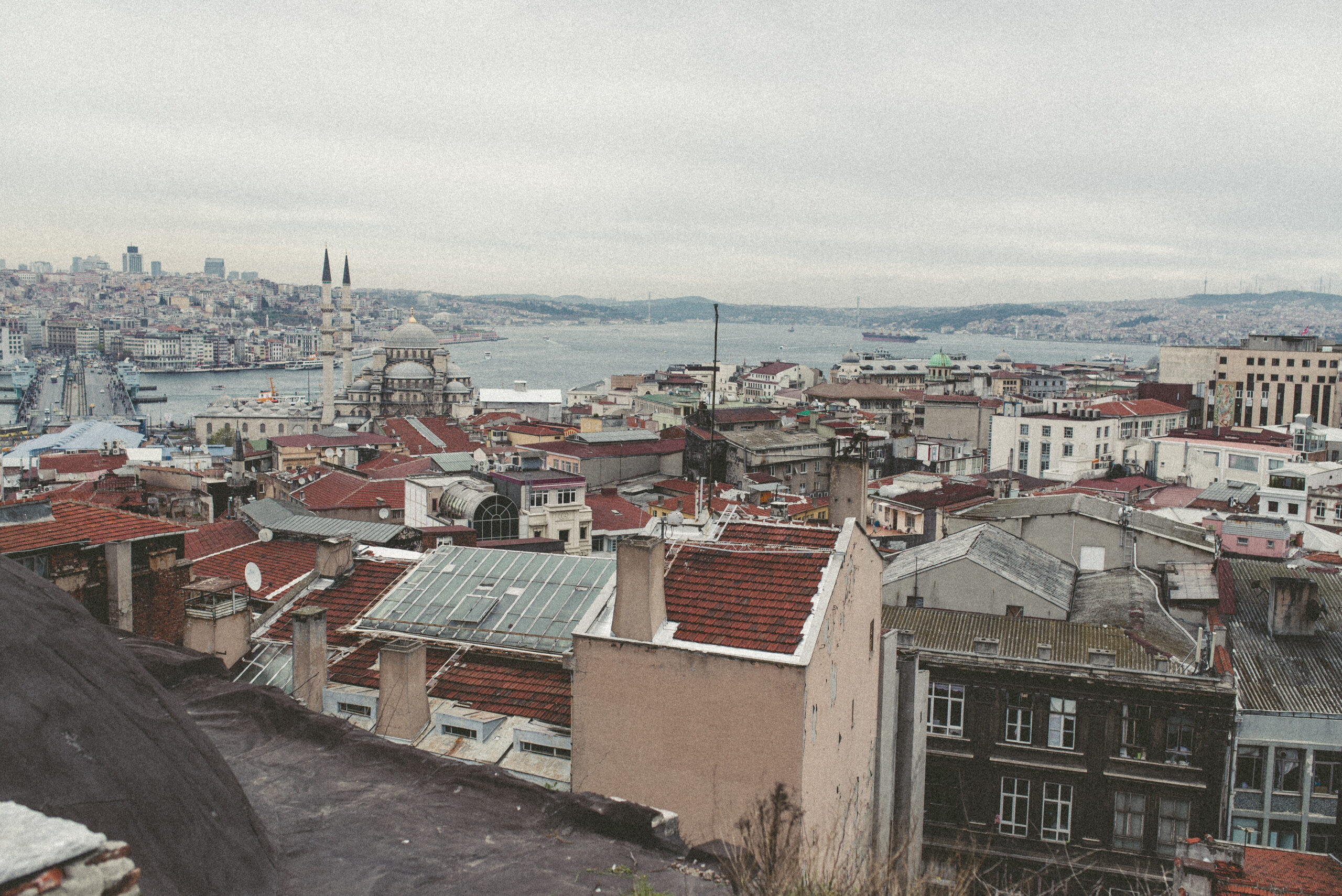
It got to the point that hypocrisy governed nearly all his interactions. He demanded I dress modestly while he wore whatever he pleased. At restaurants, he did his best to maneuver me to face only him while he faced the room. He controlled where I could go in Istanbul but roamed freely himself. He accused me of flirting while secretly entertaining a young Ukrainian woman named Maria.
His hypocrisy was woven into the fabric of who he was—imperceptible to him, devastating to everyone close to him. When the mask slipped, everything went dark.
Born in Germany to Turkish parents who had migrated for work, he was later brought back to Istanbul, a city he grew up to see as everything he was not: religious, backward, stifling. He prided himself on being Western, secular, enlightened—a carefully constructed persona pieced together from half-read books, American television, and YouTube videos. But beneath that exterior, there were no real principles; he became whatever suited him in the moment, adapting his values to fit his desires.
Our relationship became a relentless cycle of drama and gaslighting. I lost track of where I ended and he began. Every conflict became my fault. My feelings were replaced by his interpretation of them. I felt hijacked—isolated, hollowed out.
The truth is, the man I fell in love with never existed. So what had I fallen in love with? What had pulled me into a darkness so complete I could see nothing else?
Looking back, I see that I fell in love with an idea—the belief that if I could become exactly what he wanted, he would change. At the time, my self-worth was bound to this game, a game I had learned as a child, playing it with my father in the hope that if I was good enough, he wouldn’t leave. But he did.
Now I can see how the emptiness of my abusive ex became a container for my own unacknowledged vulnerabilities—parts of myself I refused to see clearly, believing I could transform them by calling them something else.
Then the violence escalated and nearly killed me.
I remember lying on the concrete floor of our rented London apartment, unsure whether there was blood, unsure whether my spine was broken. I was in unbearable pain. Moments earlier, he had grabbed me by the throat in the elevator and slammed me against the mirrored walls before kicking me in the stomach. As my body hit the concrete, I remember thinking, this is how women in abusive relationships die.
I left him. I remember the relief I felt seeing him disappear into the distance. With tears in his eyes, he insisted on walking me to the station, thinking that my leaving was temporary.
What I also see now is how that relationship became a kind of psychological exorcism. It stripped away illusions and forced me to confront the parts of myself I had long avoided. The intensity of his love-bombing, followed by neglect and abuse, brought my unresolved trauma to the surface, leaving me no choice but to face it. Painful as it was, this brought me to the point where I was able to see and begin dealing with and freeing myself from patterns that had been subconsciously shaping my life.
Sometimes, when we think something has ended, we realize that we had been on an even bigger journey all along. My abusive marriage had been cathartic in that it allowed me to examine what placed me in that situation in the first place.
Eight years later, I am in a completely different place than I was then, psychologically and physically. Due to my experience, my understanding of love and what it means to love has shifted. Love does not mean loving someone else at the expense of yourself. It doesn’t mean having to prove that you are enough. It means sharing space with someone who sees you for who you are and respects that.
x Martina