On Life in Southern Italy / Part One
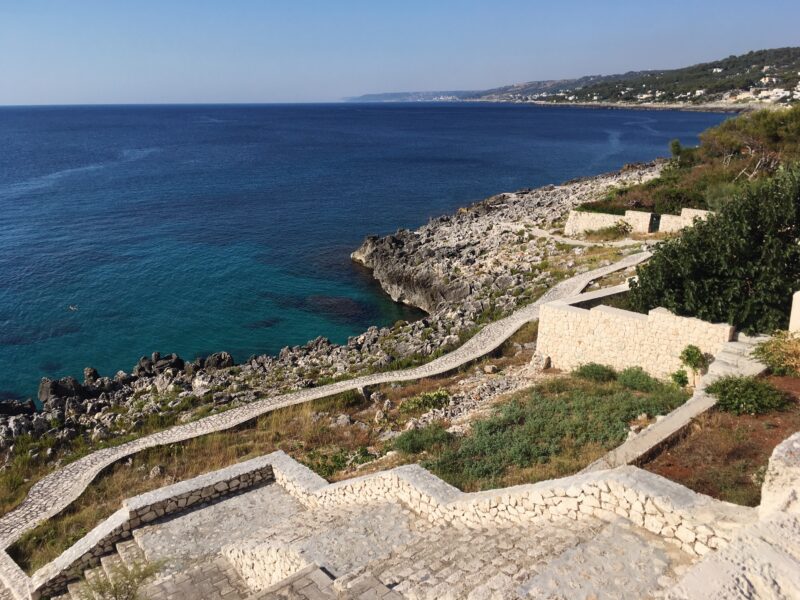
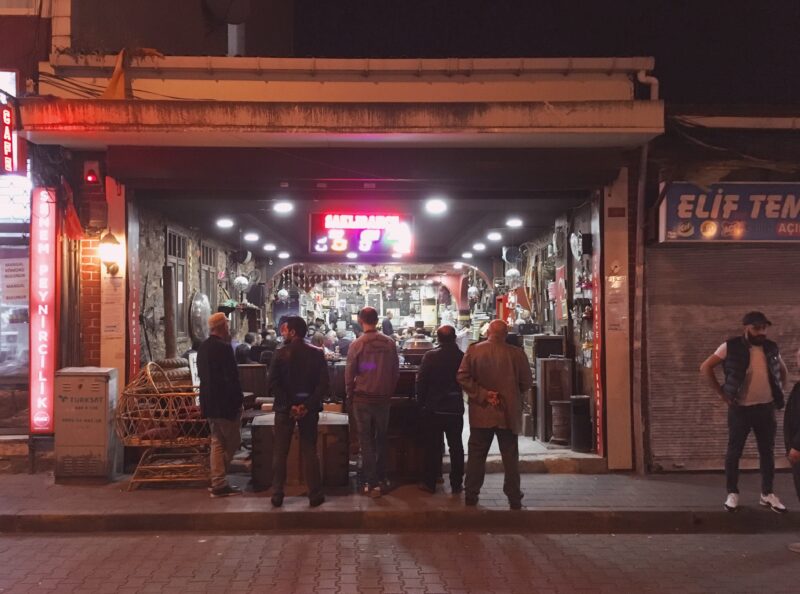
A month prior to when this photo was taken, I arrived in Istanbul full of hope and anticipation. I had spent the past few months researching European law to see whether it was possible for me to bring my partner back home with me to live in Italy.
We met while teaching at the university in Istanbul. I remember him walking into the room during our first day of orientation—black jeans, a blue checkered shirt, tall and extremely handsome, and angry at a situation that had happened moments before. He left an impression on me that was completely unexpected.
I had accepted the teaching position in Istanbul for both professional and personal reasons. Professionally, it was my opportunity to take the next step as a teacher. At the same time, it allowed me to spend time in a city that felt essential to my recovery. I had no interest in men, in being in a relationship, or in any of what that all meant.
Six months later, my contract ended, and I moved on to my next teaching contract in Puglia. But by this point—long story short—we had become an item, and against all my best intentions, we had fallen in love.
What we needed to figure out now was how we were going to be together. I had no intention of living in Istanbul long term, and he, as a Syrian, was limited in his travels. In the end, after a year and a half of being in a long-distance relationship, we decided that the only option we had was to get married—even though marriage at that time was the farthest thing from our minds.
We knew we loved each other, that we had a wonderful friendship, and that we loved being together—and that was enough. We promised each other that marriage wouldn’t change any of that and that we would only settle down when we both felt ready.
A few weeks into my research on how I could make this happen, I realized just how lucky I was to be living in Italy and not in my own country. When an EU citizen lives in another country other than the one of which they are a national, their rights of family unification fall under general EU law, not the law of the country in which they live.
My own embassy told me it would be impossible because I didn’t meet all the criteria under their laws to sponsor my partner. But because I was living in Italy, those laws didn’t apply, which meant I was also exempt from having to provide the nulla osta.
However, this was the first thing the Turkish woman working at the authorized third-party visa application center in Istanbul asked for after I explained my situation. I realized then that she had no idea about EU laws—and didn’t care.
What I thought would be the easiest step in the process turned out to be one of the most frustrating. It didn’t help that this was the time of COVID and lockdowns, and there were still so many administrative hurdles to get through before we could say “I do.” But even then, I wasn’t sure whether we would be going home to Italy together.
I don’t know why we ended up choosing Beşiktaş City Hall, but that’s where we found ourselves two and a half weeks later, handing over our documents one by one for inspection, our Turkish translator by our side. It was early morning, and the building was eerily quiet and nearly empty, except for a few civil servants and the cleaner.
When the older Turkish man glanced at our paperwork, his eyes narrowed as he realized we were foreigners. He immediately understood there was money to be made. There was so much we didn’t know about Turkish law and bureaucracy, and with time running out, he knew we were at his mercy. Every glance he gave seemed to weigh us, measure us, judge us. Three hours later, after much phaffing, huffing, and puffing, scrutinizing each stamp with a magnifying glass, he grew tired of himself and finally confirmed that everything was in order—but the only available date was three months away.
As our translator tried to negotiate an earlier date, my partner leaned over and whispered in my ear, “We need to give him something. I know how these people work.” He placed some cash in an envelope and slipped it to the older gentleman. Almost instantly, the man’s expression softened, and a previously unavailable slot—three days from now—appeared in the wedding calendar as if by magic.
We were married at a table beneath a towering portrait of Atatürk. Behind us, friends we’d corralled at the last minute stood as our witnesses, and in front of us, the government official who had accepted the envelope, dressed in a red robe, officiated the ceremony.
But still, the problem remained. My partner, now my husband, still didn’t have his exit visa. I called the visa office again, hoping that I would stumble upon someone who knew more than the first lady, but to no avail. As if reading from a script, I encountered the same answer again and again, no matter whom I spoke to: a nulla osta was needed, and without it, there was nothing they could do for me.
So I wrote to the Italian embassy directly and explained my situation, my rights under EU law, and how no one in Istanbul seemed to know this—and asked if there was any way they could help me resolve the situation. To my surprise, the Italian ambassador replied almost instantly and told us to come to the embassy the next morning at 11:30, and that he would help us.
A week and a half later, my husband had his visa, and we caught the next available flight to Rome. We celebrated our arrival with a glass of wine and pizza. We were emotionally and mentally tired—and very, very hungry.
x Martina